Most home offices have room for one active workstation, not two. So the real question is rarely "which is better?" and more often "which one will still be in use six months from now?" A standing desk and a treadmill desk both ask you to leave your chair, but they demand very different things from your money, your floor and your concentration.
Here is how the two compare on the points that actually decide it.
A standing desk is a height-adjustable desk. You raise it, you stand, you work, you lower it and sit again. Your body is stationary for most of that time, just in a different position.
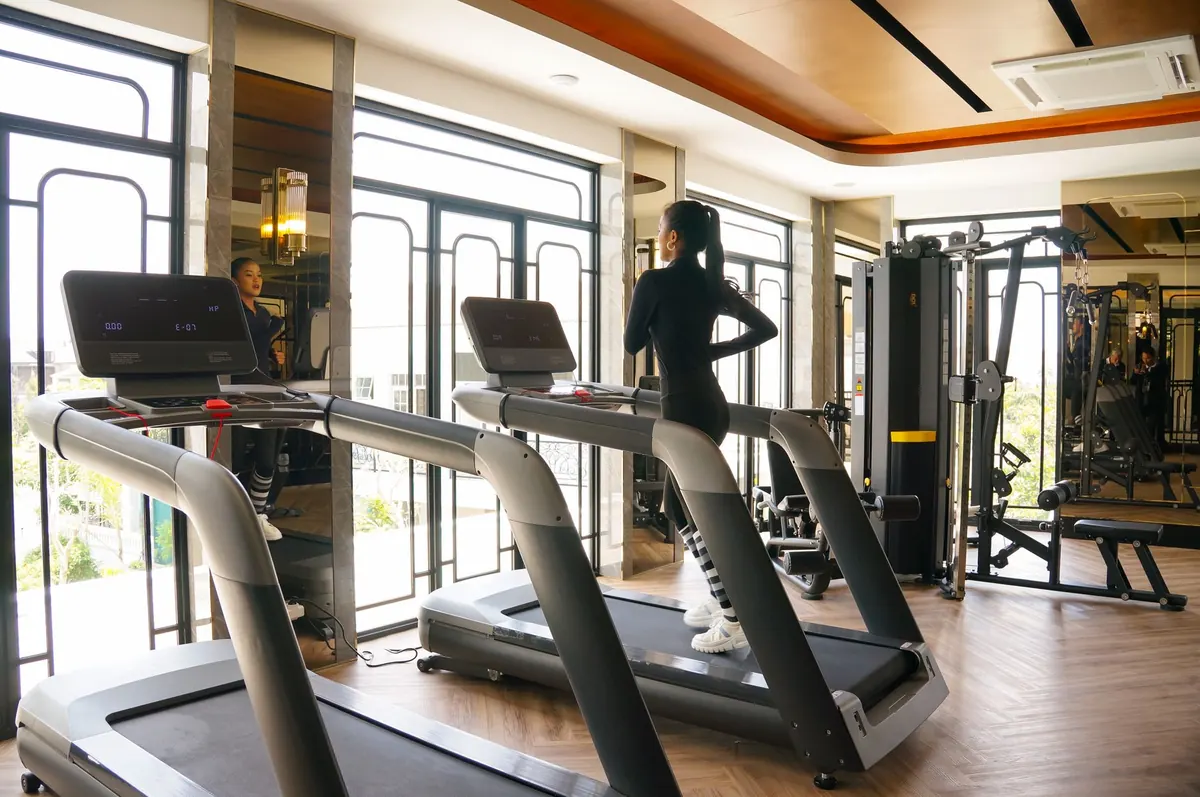
A treadmill desk pairs a slow-moving walking belt with a desk surface above it. The belt usually runs well below jogging pace — people typically walk at a stroll, around two to four kilometres per hour — while typing, reading or taking calls.
The difference sounds small. It is not. Standing is a static posture; walking is movement. Everything downstream, from cost to concentration, follows from that.
A height-adjustable desk is one of the few home office upgrades that can be done cheaply. A basic manual crank frame and top costs little; a solid electric desk sits in the middle; premium dual-motor models with memory presets and a long warranty sit above that.
Treadmill desks split into two types. Integrated units — desk and belt engineered together — are a serious purchase, often several times the price of a good electric standing desk. The cheaper route is a walking pad placed under an existing standing desk. Walking pads cost far less, but they are built for lower speeds and shorter duty cycles, and many are not designed to run for hours at a stretch.
Then there is the running cost nobody mentions in the product listing. A treadmill needs a mat, occasional belt lubrication and eventually a replacement belt. A standing desk needs a good anti-fatigue mat and not much else.
Money tip: if the budget is tight, buy the standing desk first and add a walking pad later. You will spread the cost and find out whether you genuinely walk while working before committing to a large integrated unit.
A standing desk makes noise only when it moves — a short motor hum while it travels up or down. That is it.
A treadmill desk makes noise continuously. There is the motor, the belt itself, and the sound of your feet landing. At a slow stroll in a carpeted room, that can be quiet enough to ignore. Put the same belt on a hard floor in an upstairs room and it becomes a low drumbeat that carries through the joists into the room below.
If you live in a flat, share a wall with a neighbour, or spend your day on video calls, this matters more than any spec sheet. A noise-cancelling headset helps your ears, but your microphone still picks up footfall thumps unless you mute or stop walking.
Ways to keep it civil: place the belt on a dense rubber mat rather than bare boards, walk at the slowest speed you can tolerate during calls, and choose a pad with a reputation for quiet motors. If you cannot test one in person, buy from a retailer with a genuine returns policy.
A standing desk occupies roughly the footprint of a normal desk. A treadmill desk occupies that footprint plus the length of the belt in front of you, plus clear space around it.
A standing desk gives you more options in a small room simply because it can go almost anywhere a desk already fits.
Standing desks win on convenience. You change posture in seconds, with no warm-up and no fuss. Deep focus work, precise mouse control and back-to-back meetings are all straightforward. The risk is standing still for hours, which is not much better than sitting still. Alternate between sit and stand through the day and take proper breaks.
Treadmill desks ask more of you. Typing at a gentle stroll is manageable for most people after a week or two of practice. Fine mouse work, design software and anything needing steady hands get harder, and accuracy drops as speed rises. That is why most owners use the belt in blocks — twenty to forty minutes at a time — rather than all day.
A few habits make a treadmill desk far more usable:
If you do not enjoy walking, a treadmill desk will become an expensive coat rack within a month.
Three questions usually settle it:
If you want both movement and a full working day, the combined approach works nicely: a height-adjustable desk as the base, a walking pad for part of the day, and a chair for the rest.
Buy the standing desk first. It is cheaper, quieter, easier to fit and almost impossible to regret. Use it for a month, notice how often you actually stand, then decide whether a walking pad would add something. Keep the receipt and check the returns window before you order either.
If you have a heart condition, balance problems, joint or circulation issues, or you are pregnant, speak to a GP or physiotherapist before using a treadmill desk for long periods. Neither option replaces regular breaks and everyday movement — they simply make it easier to fit more of it into a working day.
Photo: Firman Marek_Brew / Pexels